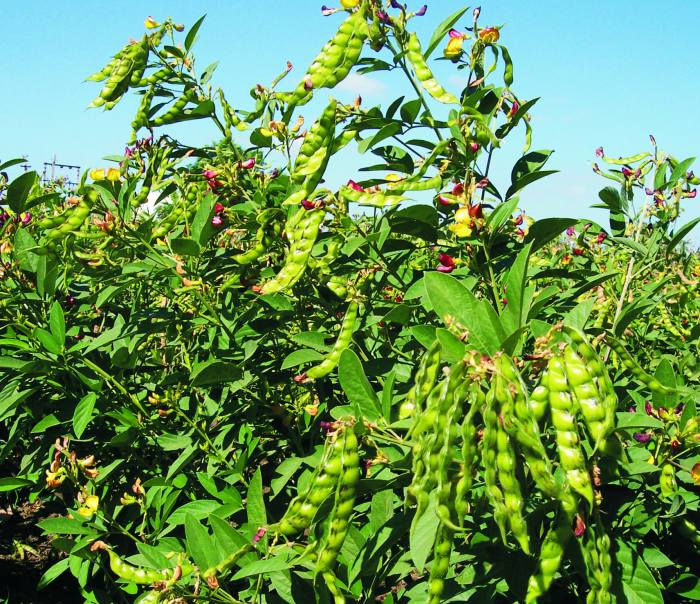

Congo Peas are a staple food crop that provides good protein. You can use the green peas like fresh peas, and the dried peas like any other dried peas, beans or lentils. (In India they are actually one of the most popular pulses. Dhal is made from pigeon peas.) The peas can also be sprouted to make them even more nutritious, and they can be ground into flour
The pigeon pea (Cajanus cajan, family fabaceae) is thought to have originated in India, where it is still widely grown as a food crop. It is also used extensively as a cover crop, green manure, inter crop etc. in many sustainable farming systems in the tropics and subtropics, and in many home gardens in warm climates.
The plant is a short lived perennial shrub. It grows to two to four metres and lives for about five years. The flowers are yellow or yellow and red. The leaves consist of three leaflets and are a dark green above and silvery underneath.
The fruits are pods, containing four to five seeds. The seeds can be a range of colours. Mine are light brown, but they can be cream, grey, purple or black, depending on the variety
Congo Peas / Pigeon Peas (Cajanus Cajun)
Pigeon peas will grow just about anywhere. They can cope with poor soils and little water. Of course they will grow faster, bigger, better, and live longer if they have plenty of water and nutrients.
Most varieties are not frost tolerant, although there are some newer varieties that supposedly can handle a bit of frost. If you get freezing winters you can grow them as an annual crop. That's not ideal from a permaculture point of view, but it's still a great food crop and soil improver.